

When I was a little kid I was a pretty colossal cry baby, but now I rarely cry. So you can imagine my consternation when I got teary eyed just reading the introduction to this great novel. It is justifiably considered to be one of the greatest war novels ever written, indeed, I believe it is one of the great novels period. Shaara manages several remarkable feats here: he succeeds in that most important task of the historical novel and brings the Battle of Gettysburg to life with an immediacy that is absolutely breathtaking; he marshals the complicated tactics and strategies of the battle and makes them easy to follow; he presents the ideas and ideals that motivated the men who fought in compelling fashion; he recaptures several American heroes and restores them to a place of honor in our memories; and most importantly, he demonstrates the terrible beauty of war. I can not possibly do this book justice, so I'll let Shaara's own words
set the scene:
FOREWARD: I. The Armies On June 15 the first troops of the Army of Northern
Virginia, Robert E. Lee commanding, slip
It is an army of seventy thousand men. They
are rebels and volunteers. They are mostly unpaid
Late in June the Army of the Potomac, ever slow to
move, turns north at last to begin the great
It is the third summer of the war. II. The Men
larger than Lee, full-bearded, blue-eyed, ominous, slow-talking, crude. He is one of the first of the new soldiers, the cold-eyed men who have sensed the birth of the new war of machines. He has invented a trench and a theory of defensive warfare, but in that courtly company few will listen. He is one of the few high officers in that army not from Virginia. That winter, in Richmond, three of his children have
died within a week, of a fever. Since that
They call him "Old Pete" and sometimes "The Dutchmen".
His headquarters is always near Lee,
Lewis Armistead, Brigadier General,
forty-six. Commander of one of George Pickett's
These men wore blue:
professor of rhetoric at Bowdoin College, sometimes professor of "Natural and Revealed Religion," successor to the chair of the famed Professor Stowe, husband to Harriet Beecher. Tall and rather handsome, attractive to women, somewhat boyish, a clean and charming person. An excellent student, Phi Beta Kappa, he speaks seven languages and has a beautiful singing voice, but he has wanted all his life to be a soldier. The College will not free him for war, but in the summer of 1862 he requests a sabbatical for study in Europe. When it is granted he proceeds not to France but to the office of the Governor of Maine, where he receives a commission in the 20th Regiment of Infantry, Maine Volunteers, and marches off to war with a vast faith in the brotherhood of man. Spends the long night at Fredericksburg piling corpses in front of himself to shield him from bullets. Comes to Gettysburg with that hard fragment of the Regiment which has survived. One week before the battle he is given command of the Regiment. His younger brother Thomas becomes his aide. Thomas too has yearned to be a soldier. The wishes of both men are to be granted on the dark rear slope of a small rocky hill called Little Round Top. Winfield Scott Hancock, Major General, thirty-nine.
Armistead's old friend. A magnetic man
The battle itself, as well as all of World War I, is foreshadowed in a speech that Longstreet makes to a British observer: Let me explain this. Try to see this.
When we were all young, they fought in a simple way. They
He broke it off. No point in talking this way
to a foreigner. Might have to fight him sometime.
And so Lee insists on attacking the Union forces, even as Longstreet urges him to withdraw and keep his Army intact. The most remarkable part of the book is the realism and excitement that Shaara brings to scenes of battle. Here is his description of the action at Little Round Top, where Chamberlain and the 20th Maine held the extreme left of the Union line (note the terse, staccato sentences, urging the action forward): He (Chamberlain) limped along the line. Signs
of exhaustion. Men down, everywhere. He
Looked up toward the crest. Fire still hot
there, still hot everywhere. Down into the dark. They
He gathered with Spear and Kilrain back behind the
line. He saw another long gap, sent Ruel
"We've lost a third of the men, Colonel. Over a hundred down. The left is too thin." "How's the ammunition?" "I'm checking." A new face, dirt-stained, bloody: Homan Melcher,
Lieutenant, Company F, a gaunt boy with buck
"Colonel? Request permission to go pick up some of our wounded. We left a few boys out there." "Wait," Chamberlain said. Spear came back, shaking his head. "We're out." Alarm stained his face, a grayness in his cheeks. "Some of the boys have nothing at all." "Nothing," Chamberlain said. Officers were coming from the right. Down to
a round or two per man. And now there was a
Chamberlain said, "Can't do that." Spear: "We won't hold 'em again. Colonel, you know we can't hold 'em again." Chamberlain: "If we don't hold, they go right on by and over the hill and the whole flank caves in." He looked from face to face. The enormity of
it, the weight of the line, was a mass to great to
Kilrain: "Colonel, they're coming." Chamberlain marveled. But we're not so bad
ourselves. One recourse: can't go back. Can't stay
The idea formed. "Let's fix bayonets," Chamberlain said. And so begins a bayonet charge that saved the day, the battle and perhaps the Union. It is impossible to read this section of the book (or watch the corresponding scenes in the movie) and not have your pulse quicken and your scalp tingle--and if you're like me, have a tear come to your eye. It is here that Shaara most fully captures the awful fact that for all its horrors, we love war--the heroism, the camaraderie, the sacrifice, the brutal beauty of men facing down their fears, all have a visceral appeal. As Chamberlain walks the battlefield afterwards: He moved forward and began to climb the big hill
in the dark. As he walked he forgot his pain; his
The book moves on to the courageous folly of Picket's Charge and to the Union's ultimate victory, a victory that Meade squandered by not pursuing the retreating Lee. Shaara provides an afterward that charts the subsequent careers of the remarkable commanders who met at Gettysburg, here are my two heroes, two men who must be reckoned great Americans in any accounting: AFTERWORD:
After the war he makes two great mistakes.
First, he becomes a Republican, attempts to join with
Second, as time passes and it becomes slowly apparent
that the war was lost at Gettysburg,
His theories on defensive warfare are generations
ahead of his time. the generals of Europe are still
JOSHUA LAWRENCE CHAMBERLAIN In August he is given a brigade. Shortly thereafter
he is so badly wounded, shot through both hips,
In Maine he is elected Governor by the largest majority
in the history of the state and returned to
In 1876, elected President of Bowdoin College, where
he attempts to modernize the school,
(Reviewed:) Grade: (A+) Tweet Websites:See also:Michael Shaara (2 books reviewed)Historical Fiction War Brothers Judd Top 100 of the 20th Century: Novels Orrin's All-Time Top Ten List - Novels Pulitzer Prize (Fiction) World Magazine Top 100 of the Century -WIKIPEDIA: MIchael Shaara -BIO: Michael Shaara (Jeff Shaara) - -ESSAY: ‘For Love of the Game’:: A family saga, a rediscovered manuscript and an unlikely movie (Cody Stavenhagen, Jan 9, 2023, The Athletic) Book-related and General Links: -ESSAY: Gettysburg’s Test of Courage: One of the bloodiest days of the Civil War happened on this day in 1863. (Francis P. Sempa, July 2, 2025, Modern Age) - -REVIEW ESSAY:Chamberlain’s War: Joshua Lawrence Chamberlain is remarkable not only for his sacrifices on behalf of the Union, but also for the moral imagination that inspired him: a review of On Great Fields by Ronald C. White (Mitchell G. Klingenberg, 2/28/25, Law & Liberty) - -Dan Schafer Review: The Killer Angels by Michael Shaara A Great Book Indeed -Father/son trilogy didn't come easily, success is sweet (Elisabeth Sherwin) -ESSAY: James Longstreet’s Lessons in Leadership: How a Confederate general who turned on the South helps distinguish leaders from wannabe figureheads. (Thomas Koenig, May 25, 2024, The Dispatch) - THE FILM:
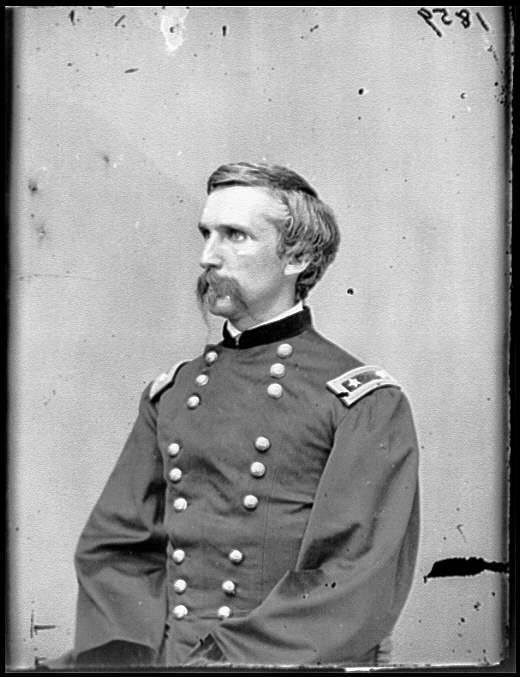
CHAMBERLAIN (1828-1914):
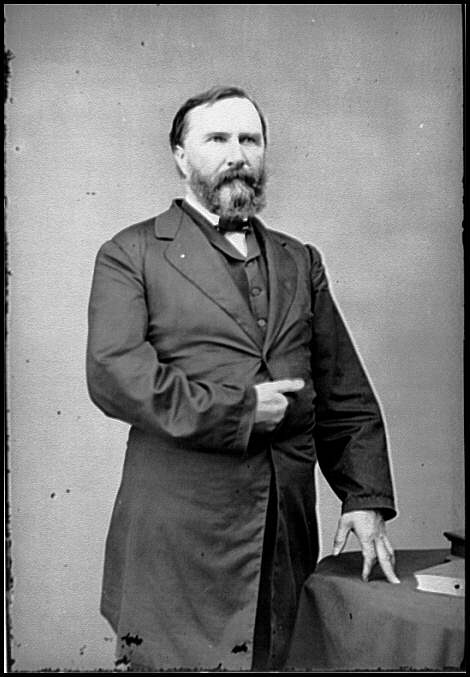
LONGSTREET (1821-1904):
HANCOCK:
ARMISTEAD:
PICKETT:
GETTYSBURG:
CIVIL WAR:
JEFF SHAARA (1952-):
Other recommended books by Michael Shaara:
If you liked Killer Angels, try:
Trulock, Alice Rains
Shaara, Jeff
and the FILM:
|
Copyright 1998-2015 Orrin Judd
